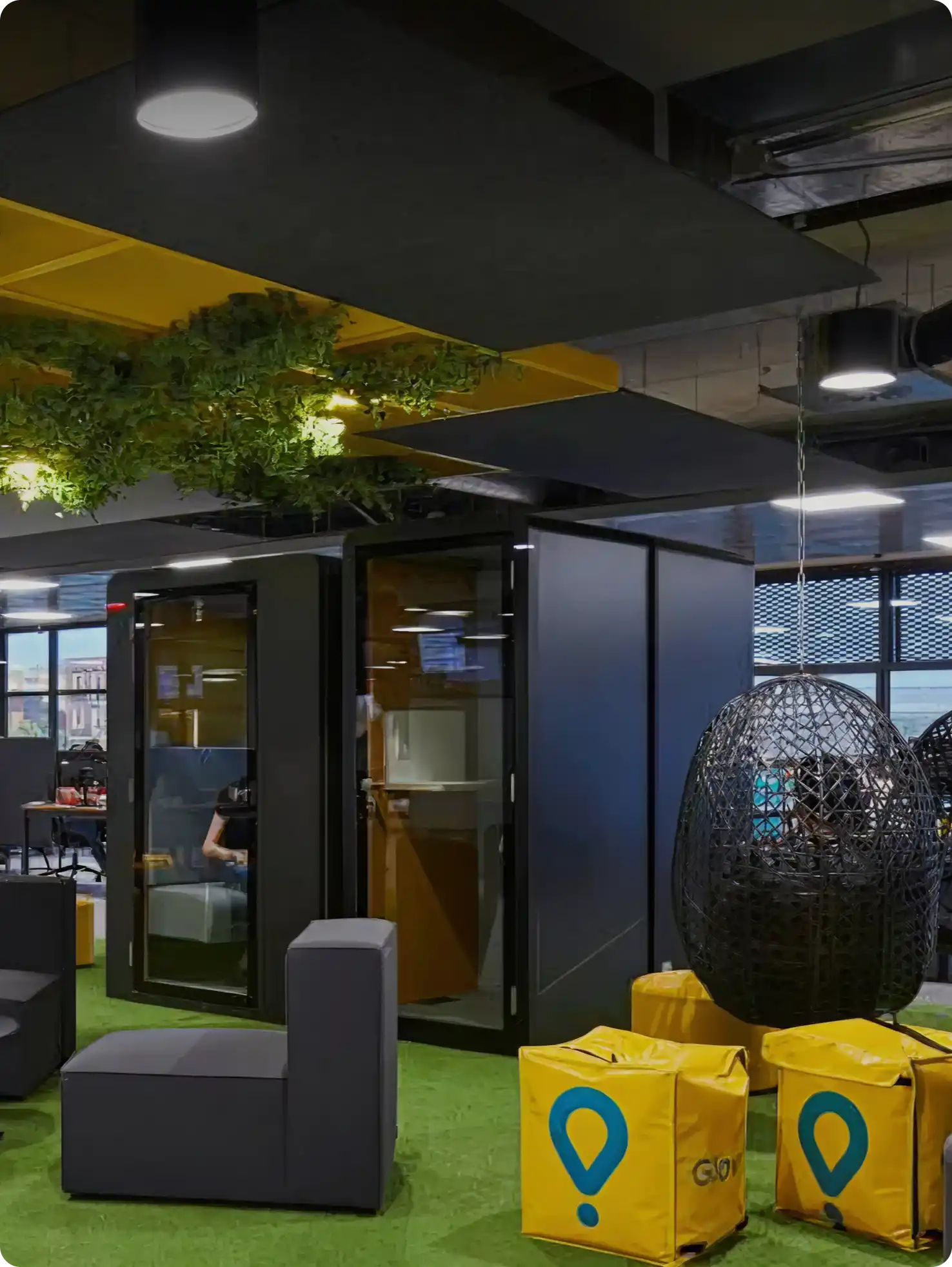
A library at eleven at night during exams. A corridor between classes with five minutes to spare. A whole afternoon of notes with energy dropping fast. In all those moments, what a student eats depends on a single variable: what is within reach. And on most campuses, what is within reach is machine coffee and a bag of snacks. Healthy vending exists precisely to change that default answer.
The campus: the perfect ecosystem, and the most neglected
Few communities combine such volume with such permanence as a university: thousands of people spending between six and twelve hours a day in the same complex, with predictable movement peaks — class changes, midday, library afternoons. And yet the quick-food offering on many campuses is still stuck in nineties vending: industrial pastries, crisps, soft drinks and coffee.
The paradox is striking, because this is the population changing its habits fastest: the generation that reads labels, asks about ingredients and has made healthy eating part of its identity. The demand is there; what is missing on campus is the supply.
The energy a studying brain asks for
Studying is physically tiring, and there is a biochemical reason: the brain is a glucose devourer — it consumes a disproportionate share of the body's energy, and more so under sustained cognitive effort. The question is not whether students need sugars, but how those sugars arrive:
- The industrial pastry delivers free sugars with no fibre: a fast glucose spike, an insulin response, and a crash 40-60 minutes later — the cycle that leads to the third coffee and the fourth snack.
- Whole blended fruit delivers the same sugars alongside its fibre and water: gradual absorption, sustained energy through an afternoon of study, and hydration as a bonus — another factor that directly affects concentration.
An Açai Boost or a Pure Vitality mid-afternoon is not only nutritionally better than pastry; it is functionally better for what the student is trying to do: stay focused. We look at this mechanism in depth in the benefits of natural fruit smoothies.
High traffic, high turnover: the right machine
A campus is not a fifty-person office: the peak from a class change can put dozens of people in front of the machine in ten minutes. The SMOOGO vending format is designed for exactly that demand pattern:
- 210 smoothies stored at -18 °C: enough autonomy for high-demand days without restocking.
- Preparation in 45 seconds per serving, with a 30-second self-clean between cups: the queue keeps moving.
- Real-time telemetry: the SMOOGO team sees sales and stock by flavour and plans restocking before anything runs out — critical during exam weeks, when consumption spikes.
- 24/7 service: the machine does not close when the cafeteria does. The January night library is exactly when it is most appreciated.
A service for the real diversity of a campus
A university brings together people with coeliac disease, lactose intolerance, vegans and international students with a thousand different eating patterns. Traditional vending ignores almost all of them. Natural fruit smoothies, by contrast, are gluten-free and lactose-free by composition — fruit, vegetables, organic agave syrup and water — with the ingredients of each flavour published with percentages on the nutrition facts page. It is one of the few machine options a campus can offer knowing it serves practically everyone.
Selling and, along the way, educating
There is a second-order effect universities value particularly: eating habits consolidate at exactly university age. A campus that offers only ultra-processed food is teaching, without meaning to, that eating fast means eating badly. One that puts real fruit next to the lecture hall teaches the opposite: that healthy can be convenient. Repeated daily across years of a degree, that message is part of the education as much as any module — and it fits the health and sustainability commitments most universities have already made public.
The map of a campus's hot spots
Not every square metre of a university is worth the same for a machine. The location study looks for four types of spot:
- Libraries: the prime location — long stays, extended hours and seasonal exam peaks when consumption multiplies.
- Busy faculty halls: class-change traffic, concentrated in ten-minute bursts every hour.
- The university sports centre: the gym pattern — post-workout — inside the campus.
- Halls of residence: evening and night consumption, when the rest of the campus services have closed.
The ideal combination is usually a library plus a second traffic point, with data from the first machine guiding where the second goes.
What the institution gains (beyond the machine)
For the university as an organisation, healthy vending touches three agendas at once:
- Student wellbeing: most universities already run active mental health and habits programmes; the food available on campus is the most visible — and often the most inconsistent — pillar of that agenda.
- Competing for students: on open days, campus services weigh on the decision. Real fruit 24/7 is tangible in a way a slogan is not.
- Public commitments: the sustainability and health agendas nearly every institution has signed find here a concrete, measurable and visible action to deliver on them.
And all of it with no internal resources consumed: the operated model means neither facilities management nor contractors touch the machine — the full operation belongs to SMOOGO, with consumption data available to the university.
How it is rolled out: zero burden for the university
SMOOGO's operated model is designed for institutions where nobody has time to manage another machine:
- Location study. We analyse campus flows — libraries, faculty halls, sports centre, halls of residence — and propose the highest-impact points.
- Installation with no building work. Space and a plug socket; nothing more.
- Full operation. Data-driven restocking, preventive maintenance, automatic cleaning and quality control, all handled by the SMOOGO team.
- Flexible commercial model. From simply providing the space with revenue from consumption, to agreements with the sports or student wellbeing services.
The extreme case: exam week
If one moment tests a campus's eating, it is exam season. Libraries full until the early hours, students sitting for ten or twelve hours, and caffeine and sugar consumption going through the roof. It is exactly the scenario where traditional vending does most harm — pastries and energy drinks as the only fuel — and where healthy vending contributes most: fruit with fibre that sustains concentration without glucose roller-coasters, and real hydration in a context where most people drink only coffee.
Operationally, exam week is also the machine's trial by fire: consumption can multiply compared with a normal week. This is where the 210-smoothie autonomy and telemetry-driven restocking make the difference — the SMOOGO team sees the sales rate in real time and brings visits forward so the machine is not empty on Thursday night. For the student, the result is simple: the good option is still there at 1 a.m., when it is needed most.
The conclusion of the course
The question worth asking is not whether students want healthy options — Gen Z consumption data has been answering that for years — but why the campus, where they spend most of their hours, still does not offer them. A real fruit machine in the library will not pass anyone's exams; but it puts clean energy, hydration and a better habit exactly where they are needed. Let's talk about your campus: we will prepare a proposal backed by data.
Want a SMOOGO machine in your space?
We install smoothie machines with 100% natural fruit in offices, gyms, universities and supermarkets. We take care of everything: restocking, maintenance and quality control.
Request a proposalFrequently asked questions
Why install healthy vending in a university?
Because thousands of students spend the day on campus and their quick options are usually limited to processed snacks and caffeine. A smoothie machine puts real fruit at the same distance and speed.
What capacity does the SMOOGO vending machine have?
It stores up to 210 smoothies at -18 °C with self-cleaning after every serving, designed for campus traffic peaks.
Does it also work during exam season with extended hours?
Yes: the machine runs autonomously 24/7, including late library nights and weekends.
Who manages the machine on campus?
The SMOOGO team: restocking based on sales data, preventive maintenance and quality control. The university only provides the location.