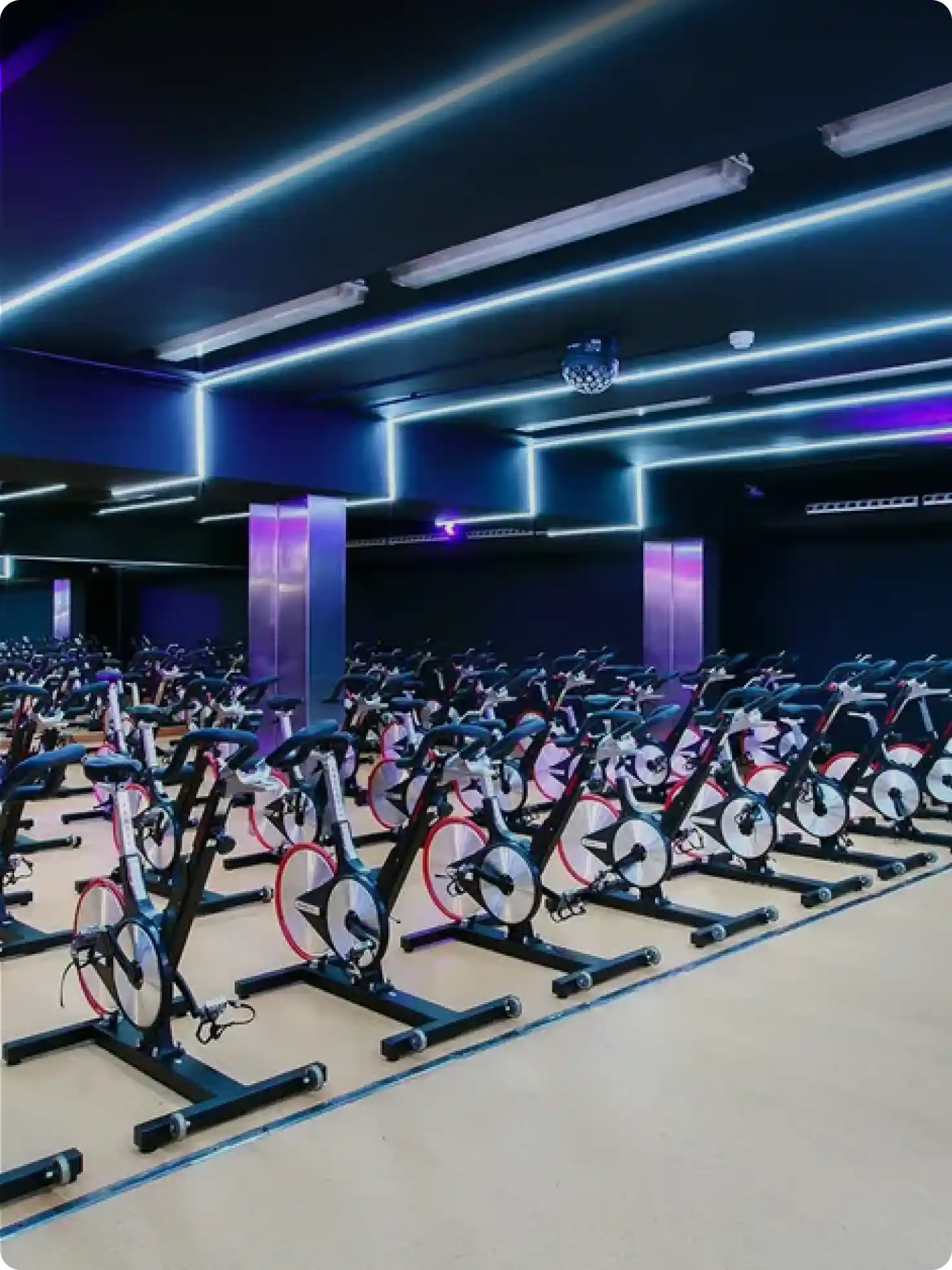
There are few places where the healthy vending equation adds up as neatly as in a gym. People who train look after themselves; people who look after themselves watch what they consume; and people who have just trained are thirsty, hungry and in a hurry. Putting those three conditions together with a real fruit smoothie machine at the changing room exit is not a marketing gimmick: it is simply the right product at the right moment.
The post-workout window
Right after exercise, the body urgently wants two things: fluid and carbohydrates. Muscles have used part of their glycogen stores and sweating has reduced hydration. A whole fruit smoothie answers both at once: water from the fruit itself and from the mix, natural sugars alongside fibre, plus vitamins and minerals — the potassium in banana, for instance, is a recovery classic thanks to its role in muscle function.
Compared with sugary sports drinks, the difference is compositional: no colourings, no flavourings: blended fruit with a touch of organic agave syrup. And it does not compete with the protein shake from the counter — it complements it. Many members have both: protein for the goal, smoothie for the pleasure and the hydration.
A service that improves the member experience
Gyms compete less and less on weight machines and more and more on experience: facilities, community, services. A juice bar has always been a valued extra — and has always had the same problem: it needs staff, perishable stock and opening hours. The result is that only very large centres could afford one.
An autonomous machine changes that equation. The service exists 24 hours a day, 7 days a week, including the quiet hours when a bar would be unviable: the 6:30 a.m. member and the 11 p.m. member get the same freshly made smoothie as the 7 p.m. crowd. And the ritual of watching the fruit being blended in front of you turns recovery into a small reward to close the session with.
A flavour for every member profile
- Green Power (pineapple, spinach, cucumber, kale): the favourite of the strict fitness profile. Real vegetables and just 42 kcal per 100 g — the lightest of the range.
- Açai Boost (mango, banana, açaí, blueberry): antioxidants and intense flavour; the recovery classic that came from the surf world.
- Pure Vitality (strawberry, banana): the combination everyone likes, ideal for members just starting out with healthy eating.
- Sunshine Energy (mango, pineapple, passion fruit): tropical and refreshing, the summer treat.
All are naturally gluten-free and lactose-free — relevant in a group where specific diets are common — and the full composition of each is published on the nutrition facts page.
The numbers for the gym
For the centre, the machine has three economic readings:
- Direct revenue. Every smoothie sold generates margin with no staff cost. The audience is captive and recurring: a member who discovers the post-workout ritual repeats it several times a week.
- Differentiation. In a market where memberships are compared to the euro, "we have real fruit smoothies 24/7" is a tangible selling point on the sales tour.
- Zero operational risk. No stock that expires, no staff to train, no waste. The SMOOGO team restocks based on sales data and maintains the machine; the gym only provides the space. We analyse the numbers in detail in our article on profitability.
What each training profile drinks
One of the lessons from SMOOGO's telemetry is that every discipline has its own consumption pattern:
- Strength and hypertrophy: sweet post-workout — Pure Vitality or Açai Boost — to replenish glycogen. Usually alongside the protein shake, not instead of it.
- Cardio and group classes: immediate hydration; Sunshine Energy and Green Power dominate the exits from spinning and HIIT.
- Wellness and yoga: Green Power as an extension of the session itself: vegetables, lightness and only 42 kcal per 100 g.
- The companion: the partner or friend waiting in reception buys too — the smoothie works as a courtesy service of the space, not only for those who train.
Where to place it inside the centre
Location matters as much as the product. The three positions that work best:
- Changing room exit: the exact point of the post-workout impulse.
- Reception: visible on every entry and exit, and easy to explain from the desk if a member has questions.
- Group class area: the exit peaks from a spinning or CrossFit class are the sales peaks.
For boxes and boutique studios, the compact machine fits any of those positions; for chains and large-format centres, the vending format gives 210 smoothies of autonomy between restocks.
How to communicate the service to members
The machine sells itself once it is seen; the centre's job is making sure it is seen. What works best:
- Placement on the natural route — changing room exit or reception, never a side corridor.
- The first smoothie as a welcome ritual: including it in the sales tour or on sign-up day turns a trial into a habit.
- Telling it where the community is: a story of the smoothie spinning in the machine performs better than any poster. The content is generated by the product itself.
- Linking it to centre moments: January challenge, wellness week, anniversary — the smoothie is the natural prize for any campaign.
Two mistakes to avoid
Hiding the machine. The post-workout impulse lasts minutes; if the machine is not on the way out, the moment passes. The sales difference between a good and a bad position within the same centre can be dramatic.
Treating it as just another vending machine. A smoothie machine does not compete with the protein bar dispenser: it is a service of the centre, and communicating it as such — "our 24/7 smoothie bar" — multiplies both its perceived value and the gym's.
What a typical centre looks like, week by week
How does a machine actually behave in a gym? The pattern repeats across most installations in three phases. Weeks 1-2: curiosity. Members discover the machine, try flavours, share the novelty; sales are good but volatile. Weeks 3-6: habit forming. A core of recurring users emerges — those who have folded the smoothie into their post-workout ritual — and the hourly peaks become predictable: group class exits and late-afternoon slots. From month two: steady state. Recurrence sustains the sales base, telemetry fine-tunes restocking by flavour, and the machine becomes part of the centre's identity.
The gym's role differs in each phase: at the start, give it visibility (reception, social media, the welcome smoothie); afterwards, nothing — the habit defends itself. It is the kind of service that costs more to decide on than to maintain: the decision belongs to the centre, the upkeep belongs to SMOOGO.
Aligning the business with why members come
Everyone who walks through a gym door does so for the same underlying reason: to feel better. The more the centre's services align with that reason, the stronger the relationship. A real fruit machine is not a decorative extra: it is the natural extension of training — recovery — turned into a service. Tell us about your centre and we will propose the format that fits best.
Want a SMOOGO machine in your space?
We install smoothie machines with 100% natural fruit in offices, gyms, universities and supermarkets. We take care of everything: restocking, maintenance and quality control.
Request a proposalFrequently asked questions
Why do smoothies work well in gyms?
Because members finish training thirsty and hungry, and a real fruit smoothie hydrates and replenishes energy on the spot — aligned with the reason they came to the gym in the first place: to look after themselves.
Does the machine need gym staff?
No. It runs autonomously 24/7 and the SMOOGO team handles restocking, maintenance and quality control.
Which flavour is best after training?
Green Power brings vegetables with a very low calorie load; Pure Vitality or Açai Boost replenish energy with sweet fruit and antioxidants. The variety means every member finds their own.
Does it take up much space?
The compact format is designed for receptions and circulation areas: it needs little more than a corner and a plug socket. For chains and large centres there is the higher-capacity vending format.